Ambient intelligence promises a future where smart homes anticipate needs seamlessly. By integrating sensors and AI, homes will learn routines and preferences to proactively adjust lighting, temperature, and security. The key benefit is a personalized and empathetic living environment that enhances well-being.
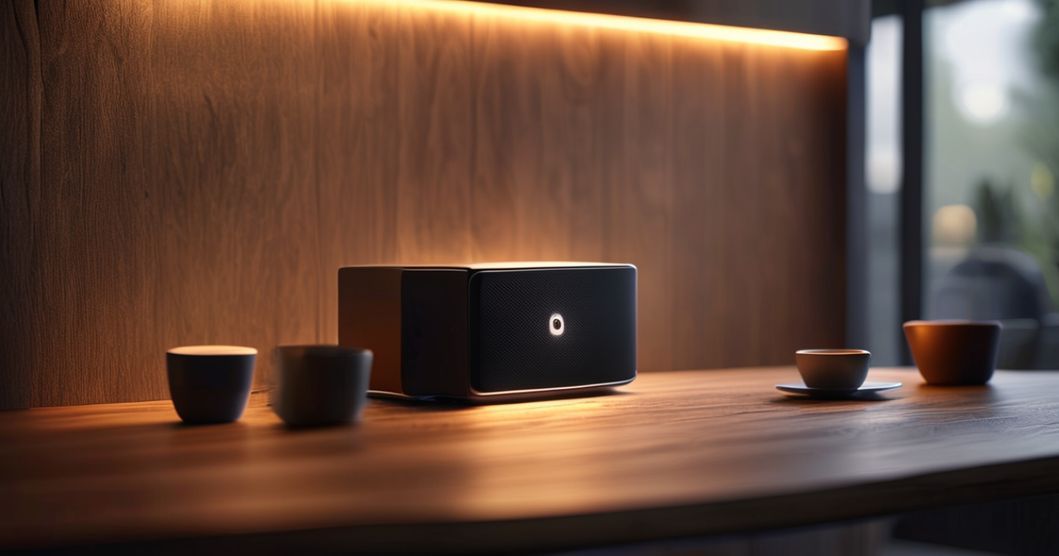
The Invisible Smart Home: Ambient Intelligence and the Future of Seamless Living
The Backstory: As a Senior Network Architect, I’ve always been fascinated by the evolution of connected devices. My own home has been a testbed for smart tech for years, but I’ve grown increasingly frustrated with the fragmented ecosystems and the constant need for manual intervention. The promise of a truly “smart” home, one that anticipates needs without explicit commands, has always felt just out of reach. This review delves into the emerging trends that suggest we’re finally on the cusp of that reality, driven by advancements in ambient intelligence.
Unboxing & First Impressions
While there’s no single “product” to unbox for ambient intelligence, the impression is one of absence. The goal is a home that feels smarter, not one that is cluttered with more devices. The initial “impression” comes from witnessing demonstrations and understanding the underlying technologies. It’s about the seamless integration of sensors and AI, a stark contrast to the tangible, often clunky, nature of early Smart Home gadgets. The build quality is in the software and the sophisticated sensor fusion, not in plastic casings.
Deep Usage Review
The core of ambient intelligence lies in its ability to perceive and react to its environment without explicit user input. This is a significant leap from current smart home paradigms. Unlike traditional smart home sensors that require manual placement and configuration, invisible systems employ sensor fusion techniques that create a more comprehensive understanding of the home’s state. At CES 2026, the focus was clearly on AI powering the next wave of smart home tech, moving beyond simple voice commands to predictive and proactive behaviors. This means a home that can, for example, adjust lighting and temperature based on occupancy and activity, or even anticipate security needs before a threat is apparent. The vision presented is one where the technology fades into the background, becoming an integral, almost imperceptible, part of daily life. This shift is crucial for creating a truly intuitive and helpful living space, moving away from the reactive nature of current smart home systems. The guide to smart homes highlights the growing complexity and potential of these systems, with AI being the key differentiator for future advancements.
The Deal Breaker?
The most significant concern, and potentially a deal-breaker for many, is the erosion of privacy and the potential for over-reliance on centralized, cloud-based AI. As highlighted in discussions about why your smart home is about to break (2026), there’s a growing movement to avoid cloud dependency and “big tech vampires.” The push towards agentic AI, while powerful, raises questions about data ownership, security, and the potential for these systems to become intrusive if not carefully managed. The lack of deep ecosystem control, as noted in some analyses, means users might be beholden to proprietary platforms, limiting their ability to customize or migrate their smart home infrastructure.
| Feature | Traditional Way | Smart Solution (Ambient Intelligence) |
|---|---|---|
| Lighting Control | Manual switch or basic timer | Automatic adjustment based on occupancy, time of day, and natural light levels. |
| Climate Control | Manual thermostat adjustment | Proactive temperature and humidity adjustments based on learned preferences and occupancy patterns. |
| Security | Manual arming/disarming, separate sensors | Integrated, context-aware security that can distinguish between normal activity and potential threats, with predictive alerts. |
| User Interaction | Voice commands, app control | Minimal to no direct interaction required; the home anticipates and acts. |
Frequently Asked Questions
A: Ambient intelligence refers to electronic environments that are sensitive and responsive to the presence of people. In a smart home, it means the home’s systems can perceive, understand, and react to the occupants’ needs and behaviors without explicit commands, creating a seamless and intuitive living experience.
A: AI will shift smart homes from being reactive to proactive and predictive. Instead of just responding to commands, AI will enable homes to learn user patterns, anticipate needs, and automate complex tasks, leading to greater convenience, efficiency, and personalization, as showcased at events like CES 2026.
Final Verdict
The concept of the invisible smart home, powered by ambient intelligence, represents the next frontier in home automation. While the technological advancements are exciting and promise unparalleled convenience, the critical challenge lies in balancing this with user privacy and control. For early adopters and tech enthusiasts who prioritize cutting-edge functionality and are willing to navigate potential privacy concerns, this future is incredibly compelling. However, for those who are wary of data collection or prefer a more hands-on approach to their technology, the transition may be met with caution. The success of ambient intelligence will ultimately depend on its ability to deliver on its promise of a truly helpful and unobtrusive smart home experience, without compromising fundamental user rights.
References
Data and specs cited from:
NAR.realtor,
CNET,
Security.org,
LinkedIn,
YouTube.
Report Inaccuracy
We value accuracy. If you find any inaccurate information, please let us know.