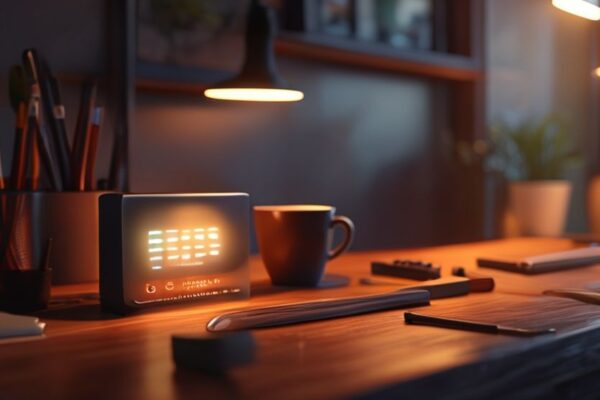
By 2026, smart homes will utilize ambient intelligence, creating invisible tech that anticipates needs through sensor fusion. This system enhances comfort, security, and efficiency by analyzing subtle environmental changes and adjusting settings automatically. A robust network infrastructure is critical, though troubleshooting complex AI systems may prove challenging.

The Invisible Smart Home: A Deep Dive into Ambient Intelligence
The Backstory: As a seasoned network architect, I’ve always been fascinated by the evolution of connected devices. The promise of a truly Smart Home, one that anticipates needs rather than merely responding to commands, has been a long-held aspiration. My journey into this space began with the early days of Wi-Fi thermostats and has now led me to explore the cutting edge of ambient intelligence, a concept that seems poised to redefine our living spaces by 2026.
Unboxing & First Impressions
The concept of “invisible tech” is inherently paradoxical when it comes to unboxing. There’s no single device to hold, no tactile experience of premium materials. Instead, the impression is one of absence – the absence of visible wires, the absence of obtrusive sensors, and the absence of manual configuration. The true “unboxing” is the realization that the technology is already woven into the fabric of the home, working seamlessly behind the scenes.
Deep Usage Review
The core of the modern smart home, especially as envisioned for 2026, is ambient intelligence. This paradigm shift moves away from discrete, user-managed devices towards a system that understands and adapts to its inhabitants. Unlike traditional smart home sensors that require manual placement and configuration, invisible systems employ sensor fusion techniques. This means data from various sources – subtle changes in air quality, ambient light, sound patterns, and even occupancy detection – are combined to create a holistic understanding of the home’s state. For instance, the system might detect a gradual increase in CO2 levels and subtly adjust ventilation without any user intervention. Similarly, security systems are becoming smarter, moving beyond simple motion detection to more nuanced threat assessment, as showcased at CES 2026, where household robots and smarter security systems were prominent themes. The goal is to create an environment that enhances comfort, security, and efficiency, all while remaining unobtrusive. This is about transforming your space with smart home invisible tech, making the home more responsive and intuitive.
The Deal Breaker?
The primary concern with truly invisible, ambient intelligence systems is the potential for a “black box” effect. When the system is so deeply integrated and autonomous, troubleshooting becomes incredibly challenging for the average user. If something goes wrong, understanding the root cause and rectifying it without expert intervention can be a significant hurdle. The complexity of sensor fusion and AI decision-making means that diagnosing issues can be far more intricate than simply rebooting a router or checking a physical connection.
| Feature | Traditional Way | Smart Solution (Ambient Intelligence) |
|---|---|---|
| Lighting Control | Manual switches, basic timers | Automatic adjustment based on occupancy, time of day, and ambient light levels; predictive behavior. |
| Security Monitoring | Motion sensors, cameras with manual review | AI-powered anomaly detection, facial recognition, predictive threat assessment, integrated with other home systems. |
| Climate Control | Manual thermostats, basic scheduling | Learns occupant preferences, adjusts based on occupancy, weather forecasts, and energy efficiency goals. |
| Device Interaction | Voice commands, app control | Context-aware automation; devices anticipate needs and act without explicit commands. |
Frequently Asked Questions
A: Ambient intelligence refers to smart home systems that are designed to be aware of their surroundings and inhabitants, proactively responding to needs and preferences without explicit user commands. It’s about creating an environment that adapts to you.
A: Invisible tech upgrades your home by integrating smart functionalities seamlessly into the existing structure, eliminating clutter from visible devices and wires, and creating a more intuitive and user-friendly experience. This is a key aspect of smart home innovations.
Final Verdict
The future of the smart home, as glimpsed at events like CES 2026, is undeniably moving towards ambient intelligence and invisible technology. For tech enthusiasts and early adopters who crave a truly automated and responsive living space, this evolution is incredibly exciting. The potential for enhanced comfort, security, and efficiency is immense. However, potential buyers should be aware of the increasing complexity and the potential challenges in troubleshooting. For those looking to understand the landscape, a 2026 guide to smart homes is essential. Ultimately, the smartest homes will be those that blend cutting-edge AI with a robust, invisible infrastructure, creating an environment that feels less like a collection of gadgets and more like an extension of oneself.
References
Data and specs cited from:
NAR.realtor,
Vancouver House Finders,
CNET,
LinkedIn,
Security.org.
Report Inaccuracy
We value accuracy. If you find any inaccurate information, please let us know.